Research
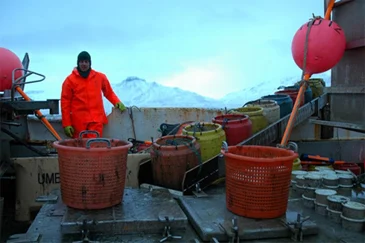
The centre's core work is research on the biota of Húnaflói bay. Among its aims is to find uses for marine resources that have had no defined use, or whose properties have not been known. The research also covers environmental monitoring, with particular emphasis on changes in the biota, what drives them and their consequences.
Algae and microalgae
Since 2008
Preparations for cultivating microalgae began in 2008. Strains were soon collected and grown in temporary facilities BioPol had at the Örvi fish market. Work on a research facility began in February 2009, and the laboratory was formally opened in April 2010.
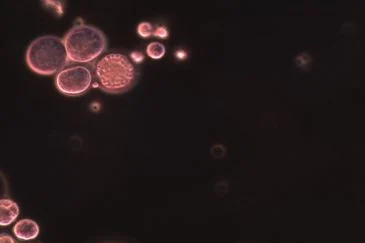
The focus has been on isolating and cultivating heterotrophic single-celled protists of the family Thraustochytriaceae, the thraustochytrids. Their products include polyunsaturated fatty acids with a high share of omega-3, used in fish feed and supplements. Thraustochytrids are primary producers of these fatty acids in the sea, and the fatty acids build up in the food chain from small crustaceans to cod and larger marine mammals. Cultivating them is a step down the food chain towards these important nutrients, in a sustainable way.
To isolate thraustochytrids, sea samples are treated in a particular way to obtain pure cultures. The strains are first isolated on agar plates and then moved to liquid cultures and a larger scale. Around 35 strains have been isolated from different places around the country. Some have a very interesting fatty acid composition, and there are signs that two of them produce the pigment astaxanthin. BioPol maintains a collection of algae in culture. The main partners have been the Icelandic Institute of Natural History in Akureyri, the University of Akureyri and Matís, which has analysed the fatty acids.
In 2010 BioPol drew up a marketing and business plan for organic seaweed extract from Icelandic knotted wrack and kelp, with support from Impra and the AVS research fund. Later projects have looked at seaweed and kelp in Húnaflói bay, red algae for skin care, alginate for food, and microalgae as feed for salmon.
BioPol takes part in PHABB, an international project led by the Muséum national d'Histoire naturelle in Paris and the University of Aberdeen, on using viruses to protect algae cultures.
Publications
- 2025Arctic and sub-Arctic marine diatom responses to PFAS exposure: Understanding physiological changes and resilienceArulananthan, A., Scholz, B., Karsten, U., Grossart, H.-P., Sigurbjörnsdóttir, A., Rolfsson, Ó. et al.
- 2025Environmental impact of brine from desalination plants on marine benthic diatom diversityGrammatiki, K., de Jonge, N., Nielsen, J. L., Scholz, B., Avramidi, E., Lymperaki, M. et al.
- 2025First record of the diatom pathogen Diatomophthora perforans cf. subsp. pleurosigmae (Oomycota) from the Mediterranean microphytobenthosScholz, B., Grammatiki, K., Avramidi, E., Lymperaki, M. M., Resaikos, V., Papatheodoulou, M. et al.
- 2025ParAquaSeq, a database of ecologically annotated rRNA sequences covering zoosporic parasites infecting aquatic primary producers in natural and industrial systemsVan den Wyngaert, S., Cerbin, S., Garzoli, L., Grossart, H., Gsell, A. S., Kraberg, A. et al.
Lumpfish
Since 2008
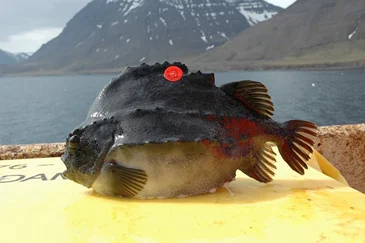
In spring 2008 BioPol started a large project on the life history and behaviour of lumpfish (Cyclopterus lumpus). It first focused on Húnaflói bay and Skagafjörður and has since spread around the whole country. Partners are the northern division of the Institute of Freshwater Fisheries, the University of Akureyri, the National Association of Small Boat Owners and the Marine Research Institute. The invaluable support of small boat fishermen around the country deserves mention: the project would never have worked without them.
The project has three parts: lumpfish are tagged to study their migration, caught with special gear for detailed study on land, and their skin is tested as a source of collagen. The project has received grants from the Fisheries Project Fund, the Budget Committee of the Althingi and the AVS research fund.
The results have drawn some attention, and the long journeys of individual fish along the coast during spawning surprised many. They suggest that there is a single, uniform stock around the country. The genetic structure of the stock has since been studied across the North Atlantic, and in 2024 a paper was published on getting the most collagen out of the skin.
Publications
- 2024Maximizing collagen yield from underutilized lumpfish (Cyclopterus lumpus) skins by optimizing pre-cleaning and extraction methodsScheja, J. M., Sigurðarson, J. J., Ólafsson, H. G., Einarsson, H.
- 2020Intra- and interannual variation in fecundity and egg size of lumpfish (Cyclopterus lumpus) in IcelandKennedy, J., Ólafsson, H. G.
- 2019A brief history of lumpfishing, assessment, and management across the North AtlanticKennedy, J., Durif, C. M. F., Florin, A.-B., Fréchet, A., Gauthier, J., Hüssy, K. et al.
- 2019Conservation of spawning time between years in lumpfish Cyclopterus lumpus and potential impacts from the temporal distribution of fishing effortKennedy, J., Ólafsson, H. G.
Seals
Since 2008
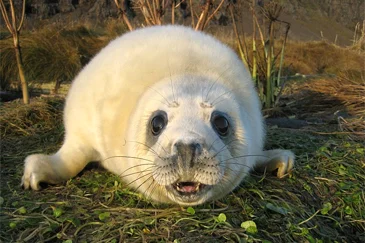
Since 2008 around 500 seals have been dissected and sampled by BioPol. The aim is to study the diet of the different seal species around Iceland. Their diet was last studied in 1992 and 1993, and marine life has changed a great deal since, so new information on what seals eat under different conditions in the sea is needed.
Monitoring and mussel farming
2009–2013
In April 2009 a project began to monitor four areas in Húnaflói bay for mussel farming: Sölvabakki and Stapi on the east side of the bay, and Gjögur and Djúpavík in Strandir. The monitoring covered what matters most for the growth of mussels, mainly salinity, temperature, the amount and species of algae, toxic algae and the number of mussel larvae in the sea over the summer. The project received a grant from the Northwest Iceland growth agreement, and BioPol contributed sampling and expert advice.
In April 2010 a similar project began in Miðfjörður, also with a grant from the growth agreement. Collector lines for mussels were set out in July 2010, and settlement and growth exceeded expectations.
Publications
- 2016Vöktun þorsks og ýsu í Húnaflóa (PDF)Sigurðsson, V.
- 2013Development of a monitoring programme for the occurrence of phytoplankton derived toxins in blue mussels (Mytilus edulis) in northern Icelandic coastal waters (PDF)Scholz, B., Jónasson, B., Ólafsson, H. G., Davidson, K., Einarsson, H., Magnússon, K. P.
- 2013Tilraunarækt á kræklingi í Miðfirði: vöktun á umhverfisþáttum, II. verkefnaár (PDF)Jónasson, B., Ólafsson, H. G.
Anglerfish
2010–2011
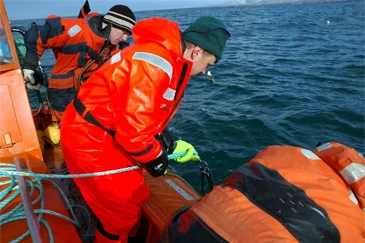
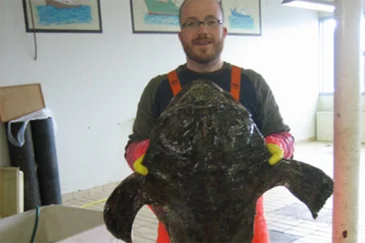
In summer 2010 BioPol began the project “Life history, stock structure and ecological impact of anglerfish (Lophius piscatorius) in recently colonised waters”. It aimed to learn about the life history, stock structure and effects of anglerfish on ecosystems in its new habitats off the west and north coasts of Iceland. The fished stock was studied in selected areas in Breiðafjörður, the Westfjords and Húnaflói bay, with emphasis on the diet of anglerfish and its interaction with other commercial species such as lumpfish. Above all, the aim was to respond to the large changes in the distribution of anglerfish and to strengthen the basis for fishing the species.
At first the focus was on fish caught as bycatch in lumpfish nets, but fish from anglerfish boats were also studied. In summer 2010, 750 fish were measured and dissected, and 1,420 anglerfish were studied over the two years. In 2011, 197 anglerfish were tagged.
Publications
- 2011Lífshættir, stofnsamsetning og vistfræðileg áhrif skötusels (Lophius piscatorius) á nýjum útbreiðslusvæðum (PDF)Nebel, S., Ólafsson, H. G., Jónsson, B.
Iceland scallop
2010–2011
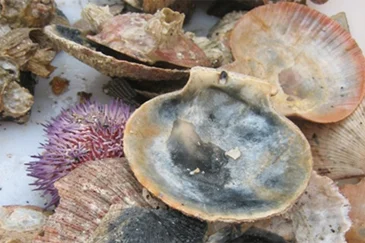
Scallop fishing and processing were for a time a sizeable industry in Northwest Iceland. In 1998–2000 natural mortality of scallops rose sharply in all the main fishing grounds around Iceland, and an infection is believed to have caused the stock to collapse, so fishing stopped.
In 2010 BioPol received a grant from the Northwest Iceland growth agreement to assess the state of the scallop stock in Húnaflói bay with regard to infection. The work was done with Árni Kristmundsson at the Institute for Experimental Pathology at Keldur, University of Iceland. The results suggest that the scallops are still in rather poor condition, so there is hardly a basis yet for fishing the stock in Húnaflói bay.
Publications
- 2011Ástand hörpudisks (Chlamys islandica) í Húnaflóa með tilliti til sýkinga (PDF)Ólafsson, H. G., Jónasson, B., Kristmundsson, Á.
Common whelk
2010
The project was a pilot study of whether common whelk (Buccinum undatum) is found in fishable quantities in Húnaflói bay. If it were, whelk fishing could benefit small boat operators in the area at a time of falling income from shrinking quotas. That required information on the whelk in the area: density, size, weight, age, sex and parasite load.
Strings of whelk traps were set in selected areas of Húnaflói bay, chosen for their bottom type and depth, and the catch was brought ashore and studied. The work was done with Sægarpur ehf. in Grundarfjörður, Vík ehf. in Skagaströnd and Vör, the marine research centre at Breiðafjörður, with a grant from the Northwest Iceland growth agreement.
The main results suggested that there is little whelk in eastern Húnaflói bay, and measurements of maturity and size indicated that area-based management would be needed if fishing began.
Publications
- 2010Frumathugun á útbreiðslu og líffræði beitukóngs í Húnaflóa (PDF)Jónasson, B., Ólafsson, H. G., Kristjánsdóttir, L., Guðmundsdóttir, B., Lárusdóttir, Ó.